

THE OYSTER EFFECT.
Experimental documentary · Archival video collage · 2010
Between nineteenth-century Vienna and the ritual traditions of Southern Italy, The Oyster Effect explores how women's experiences of psychological distress have been interpreted, represented and shaped by their cultural environments.
Through fragmented archival footage, conflicting voices and architectural imagery, the film draws connections between medical histories, ritual practices and the search for self-expression.
About the work.
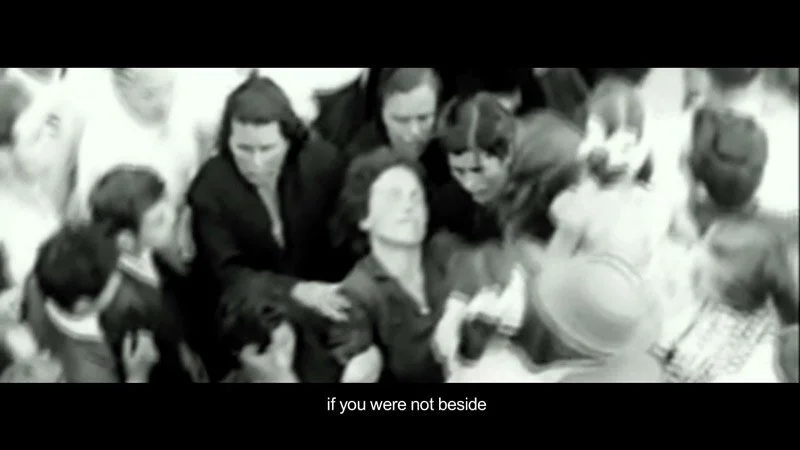
Taking as its starting point archival footage from anthropologist Ernesto de Martino's research into Tarantism in Southern Italy, The Oyster Effect unfolds as a fragmented journey through women's subjectivity, psychological distress and cultural memory.The film juxtaposes accounts associated with Anna O., whose experience of hysteria was documented by physician Josef Breuer in nineteenth-century Vienna, with testimonies and images of Tarantism in rural Salento. In one context, women's suffering is interpreted through the medical and psychiatric language of Central Europe; in the other, it finds expression through ritual, music and ecstatic dance.
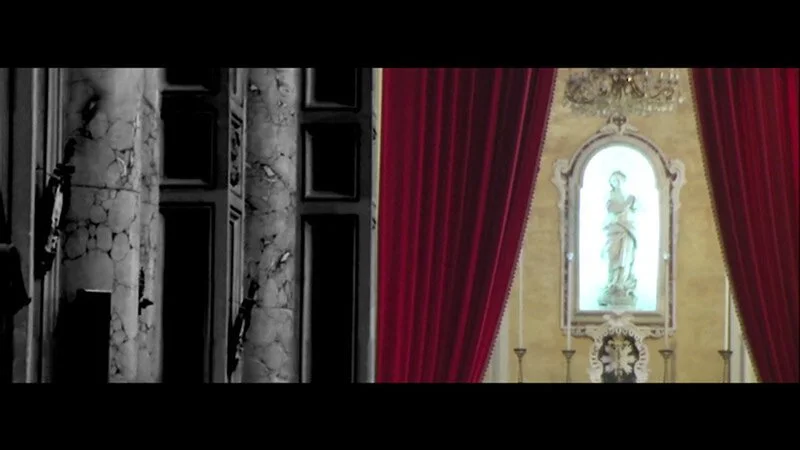
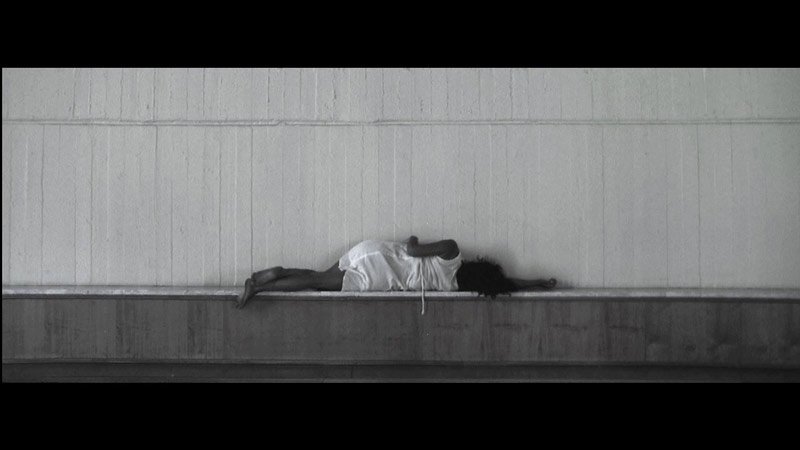
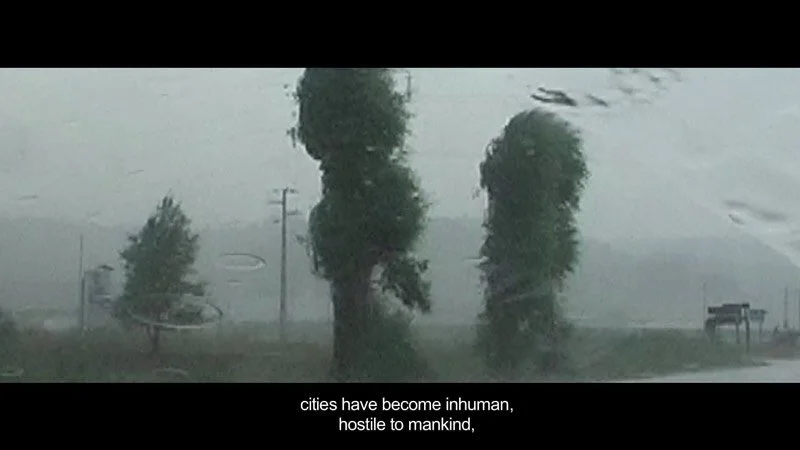
Moving between religious architecture, institutional interiors, landscapes and archival imagery, the film examines how cultural and social environments shape the ways distress is experienced and understood. Rather than establishing a direct equivalence between these histories, The Oyster Effect deliberately disrupts their parallels. Images and voices intersect, contradict and displace one another, creating an unstable narrative in which the boundaries between illness, ritual, repression and resistance remain unresolved.
The film combines archival documentary footage, historical texts, voiceovers and sound collage. Excerpts from de Martino's research are interwoven with German-language narration connected to Anna O.'s account, alongside fragments of architectural and landscape imagery. Through non-linear editing and the deliberate disjunction between image and sound, the work challenges conventional documentary narration and historical continuity.
PROJECT DETAILS.
Year: 2010
Medium: Experimental documentary, HD digital video
Duration: 12'49"
Format: Colour and black-and-white, sound
Concept & Direction: Valentina Ferrandes
EXHIBITIONS. SCREENINGS.
2015 Al Tiba 9 - Bardo National Museum Algiers
Artists Film Screenings - Karst Gallery - Plymouth, UK
2014 -Festival Cinemazero - Trento - IT
6th Cairo Video Festival - Cairo, Egypt
2013 - Venti per Una (Touring) - 5th Moscow Biennale of Contemporary Art - Zurab Tsereteli Art Gallery - RU - Istituto Garuzzo per le Arti Visive, Hangar Bicocca, Espacio Cultural Museo de la Mujeres, Argentina
Fabbri Prize for Contemporary Art - Fabbri Contemporary Art Foundation - Villa Brandolini - IT
Confini Visual Arts Festival - Horcynus Orca Foundation - IT
Index Area - SoutHeritage Foundation - IT
2012 - Art Verona Art Fair – Galleria Murat 122 - IT
Sheffield Fringe - Films at the Intersection of Art and Documentary - Sheffield Hallam University - UK
The One Minutes - Shanghai Television Festival - CN
For Hours and Hours - Galleria Boccanera Trento - IT - Curated by Visualcontainer
2011 - Biennale de la Mediterranee - Museum of Contemporary Art - Rome - IT - Official Selection
7th International Directors’ Lounge - Berlin - DE - Official Selection
International Short Film Festival Detmold - DE
London Salon Video Prize - UK
Rencontres Internationales - Paris - Finalist Works Exhibition
Celeste Prize - Bologna Archaeological Museum
Memory Awake - Storey Gallery - Lancaster, UK
I Sensi del Mediterraneo - Hangar Bicocca, Milano, IT
Contemporary Como Contest - Spazio Natta, Como, IT
Other projects
Other Than Our Sea. Exp. Docu. 2015
Daaphne. CGI. 2022